
Main Articles
PANORAMA: IL FUTURO BY ALICIA SCHERSON
By José Sarmiento Hinojosa Preceded by good comments and reviews, this adaptation of Roberto Bolaño‘s «Una Novelita Lumpen» (the last novel he published in life) even arrived with

By José Sarmiento Hinojosa Preceded by good comments and reviews, this adaptation of Roberto Bolaño‘s «Una Novelita Lumpen» (the last novel he published in life) even arrived with

By José Sarmiento Hinojosa
Jacques (William Hurt) and Mado (Alexandra Lamy) are a couple who loses their child tragically in an accident and gets separated because of a destructive mourning process. After leaving to America to restart his life, Jacques gets reunited with her former wife, returning to France to handle his father succession. There, he’ll meet her 7 year-old son of a new marriage, Paul, and a succession of obsessive and morose passages will lead to disaster.

By José Sarmiento Hinojosa
It should not become as a surprise that Gustav Deutsch(Vienna, 1952), better known from his work with found footage of obscure sources, had decided to do a film about Edward Hopper’s paintings, recreating the story of Shirley’s (a fictional lead character) personal life through the 30’s to the 60’s. “I am interested in the meaning that is given by the image”1, were his words about Film Ist. a Girl & a Gun, and that reflection could easily land in fertile ground when referring to this latest film. Shirley: Visions of Reality, it’s probably 2013’s definitive masterpiece, a film which digs deep into Hopper’s universe and uses it to spark a story which speaks about an era, its politics, its mood but more importantly, an intimate personal journal through one of America’s most convulsed periods.

by Julie Grossman and Therese Grisham
This essay aims to unlock gender from specific genre types by way of Ida Lupino’s melonoir films of the 1950s. The strong associations critics and viewers have forged between genres and gender categories have marginalized Lupino’s contributions, which are only now coming into critical view. Merging film noir and women’s melodrama brought her tough noir vision more fully into the domestic sphere, establishing an intriguing blend of what Therese Grisham identifies more particularly as “home noir.”

By Adrian Martin
Land of the Dead (2005) is, at every moment, a jaw-droppingly audacious film. In fact, it is Karl Marx’s Capital on the multiplex screen. George Romero’s anti-Bush (indeed, anti-American) rhetoric is fearless and unrelenting: the embodiment of evil capitalism, Kaufman (Dennis Hopper), announces, “We don’t negotiate with terrorists”; and his opponent, the heavily ethnic Cholo (John Leguizamo), later responds with: “I’m gonna do a Jihad on his ass.” Only a supposedly trivial zombie horror movie – dismissed, overlooked or treated summarily by many mainstream, middlebrow critics – could manage to fly under the ideological radar so completely to work its savage, subversive mischief.

By José Sarmiento Hinojosa
The dance ritual as an identity of a group or an individual is elemental in Manuli’s films: symbolic elements of dialogue or expression of the body against what’s being imposed to them dramatically. As such, the escapist rhythms serve as rhetoric figures of the tale. Kaspar Hauser, the legend, escapes his own transcendence through a mechanism of frantically expressive moves (aptly performed by danseuse Silvia Calderoni) which expresses the sentimental learning of the lead role. If in Herzog’s version of the same film, Hauser (Bruno S.) strived to give significance to his dialogue permeating it with the essential, carefully choosing whatever important thing he perceived after his long captivity, Calderoni (and androgynous, spastic character) responds to the weight of the dramatic with mystical dancing: Hauser is no longer a boy found in an empty room, he’s an extra- terrestrial being sent from space to destroy status quo. Calderoni’s character does not strive to live up to the expectations of society; he’s an alien being, a portrait of the absurd, a messianic character.

By José Sarmiento Hinojosa
The saying goes “no man is an island” but FJ Ossang could be easily an archipelago on itself: Poet, musician, filmmaker, and actor; the expressive capacity of Ossang has transcended beyond the blurry lines of genres and disciplines, not digressing in each one of his attempts, but achieving a magnificent articulation that projects the identity of his art: a post-apocalyptic sci-fi punk noir universe, a classification that, paradoxically, defies any classification.

By Claudia Siefen
Mes’s sort of narrative history of Miike’s filmography gestures at its philosophical dimensions, and is also interested in coupling the director’s biography with the wider aesthetic and japanese society contexts of that decades, too. His book is gripping, as he is dipping from time to time in self-forgotten sentences but never pedantic or even worst: embarrassing. The book’s expansive, full-coloured pages (a ballanced range of unique set photos and film stills by long-time Miike collaborator Christian Storms) and generous margins render that volume a world unto itself, while emphasising the issues Mes addresses in his tale.

by John A. Riley
A body found in a ditch in a remote rural area. Violent cops with no qualms about roughing up suspects. Rivalry between the rural cops and the big city detective who’s assigned to the case as it becomes clear there’s a serial killer on the loose. The well-worn tropes of the detective and police procedural genres are, in Memories of Murder, reinvigorated and fashioned into something sly and critical that retains a hard-hitting power.
By Sarah Nichols
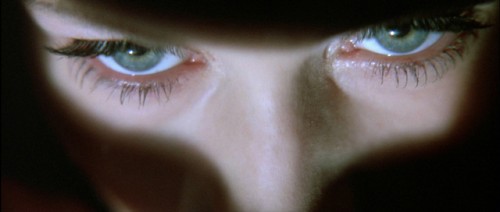
In looking for a way to write about David Lynch’s Lost Highway, I found myself going back to the 1955 essay “Towards a Definition of Film Noir” by Raymond Borde and Etienne Chaumeton. They were, of course, looking at those films from what we think of as the classical period of noir, and realizing that “one could simplify the problem by assigning to film noir qualities such as nightmarish, weird, erotic, ambivalent, and cruel” (1).