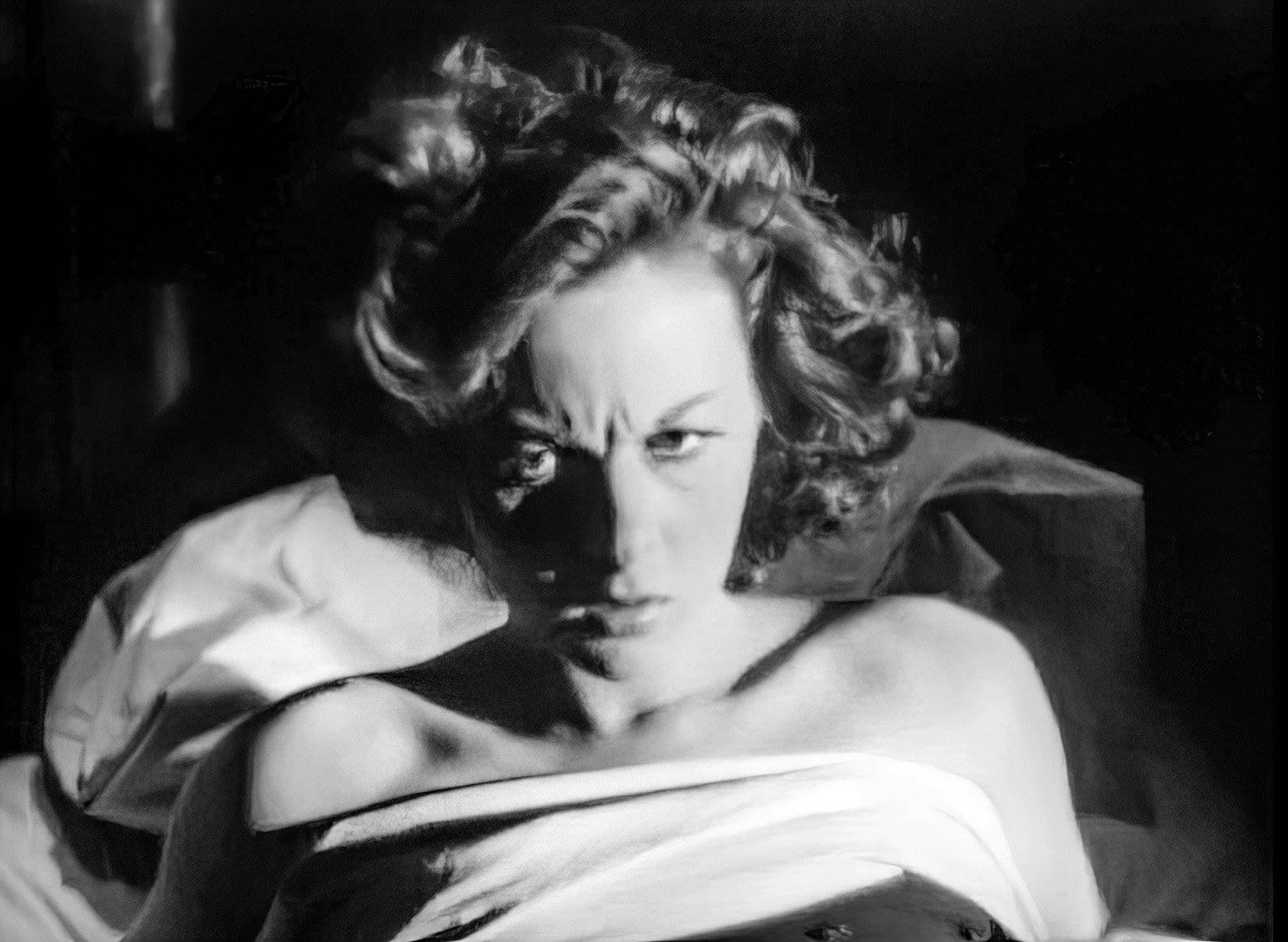
by Claudia Siefen-Leitich
I own a black notebook. During the last five years, movements, scenes, cuts, camera pans, acting tricks and even pure noises have found their way into it after each of my visits to the cinema. Over the course of time, sub-orders have been found in this book, for example “lifting an apron”. From this I was able to make my experimental film Been Waiting for you so long in 2012. Lifting the apron promised suspense, irritation and a variety of reasons why and, above all, how an apron was lifted by the actress in question. What happened before? What happened afterwards? For me, the art of acting, when it came to the portrayal of illness, also focused on the strength of the respective character in the film. A film is a film, things are often fast-paced on set: what exactly is shot to show the character in a state of unwellness? My years in the editing room for documentaries, commercials and also TV series did not want to disregard image editing. I continued to collect such scenes.
One day I came across (how many years ago?) the correspondence of the brothers James, Henry and William. The successful novelist and the no less successful sociologist were talking about publishing difficulties, writing difficultier, the helplessness and the helpless abandonment that sometimes comes with all that. And they talked about their younger sister Alice, who had to be persuaded to publish her writings because she was the real writing genius of the family. So the brothers wrote. Alice. Alice prefered not to. Alice retreated to Venice, also to continue her writing. But above all to let her texts disappear quietly in a drawer. She had been suffering from cancer and didn’t feel up to the pressure. Her brothers were suffering enough, she wrote. But she herself did not want that too.
The name Alice quickly brings one to Alice in Wonderland in this my fragile fabric, the female body is sometimes too big, sometimes too small. Alice as a prototype? How actually defining the concept of illness? For me, there are clear definitions of illness, which are not to be doubted, cancer illnesses and mental illnesses, for example. But I also saw room for manoeuvre and began not only to collect, note and analyse film scenes, but also to collect books regarding this subject. Sociology, art history, medicine and also architecture were helpful to me: I was probably not alone in my scenic search and I refer here to true heroes of my bookshelves: Warburg, Bronfen, Foucault, Mann, Bourdieu, Panofsky, Alpers, Dijkstra, Canguilhem. With every film scene, with every book, my fabric became denser. I wanted to continue to emphasise and foreground the dramaturgical strength of the women in question, and a sketchbook for a documentary film came into being. This book here brings together film stills I collected and my extensive essay. The journey of Alice continues…
To give a certain impression in terms of content and especially language, I have selected and translated some passages from my German-language book here:
«At the same time, the previous tension is rubbed off on the piece of cloth that is physically so close, floats in the air and sometimes the cushion is still nicely adjusted: you never know. More resolute characters sit upright in bed, only to remove the cushion in the back at some point with a jerk and fling it into the next corner, but sometimes a corner of the bedspread in the darkened room is also neatly pushed into its designated place, or even folded up and put away. Something will happen. Something was going on outside the picture while we were still watching the actress doing her professional job. Even the moment of being sick in itself promises suspense: what does this retreat into the bedroom, carried out all alone and without erotic pretensions, enable her to do? What does she take out of it? Such bed scenes are brought into relation with each other here and brought into focus, the closer we get to the sick person, the better. The accompanying tension, anticipation or even fear continues to carry the sickbed, just like the scenes shown and also discussed in their concentrated form, and passes it on to the reader. In which space does the woman fit in, which is intended for her and above all: which space does she take for herself? And if the challenge for little Alice is to find new ways for herself to successfully negotiate or even iron out what often seems nonsensical and let it speak for itself, then it is also about pushing the limits of our own imagination in creating worlds that are big, fantastically strange enough to accommodate her. Finding new ways to inspire, provoke and expand what can be called an emotional recognition of Alice’s truth, very much her own truth, even as a spectator herself. So this story is nothing other than an extensive cosmos of a female world. And it thus naturally includes power relations, struggles, but also strategies and retreats.»
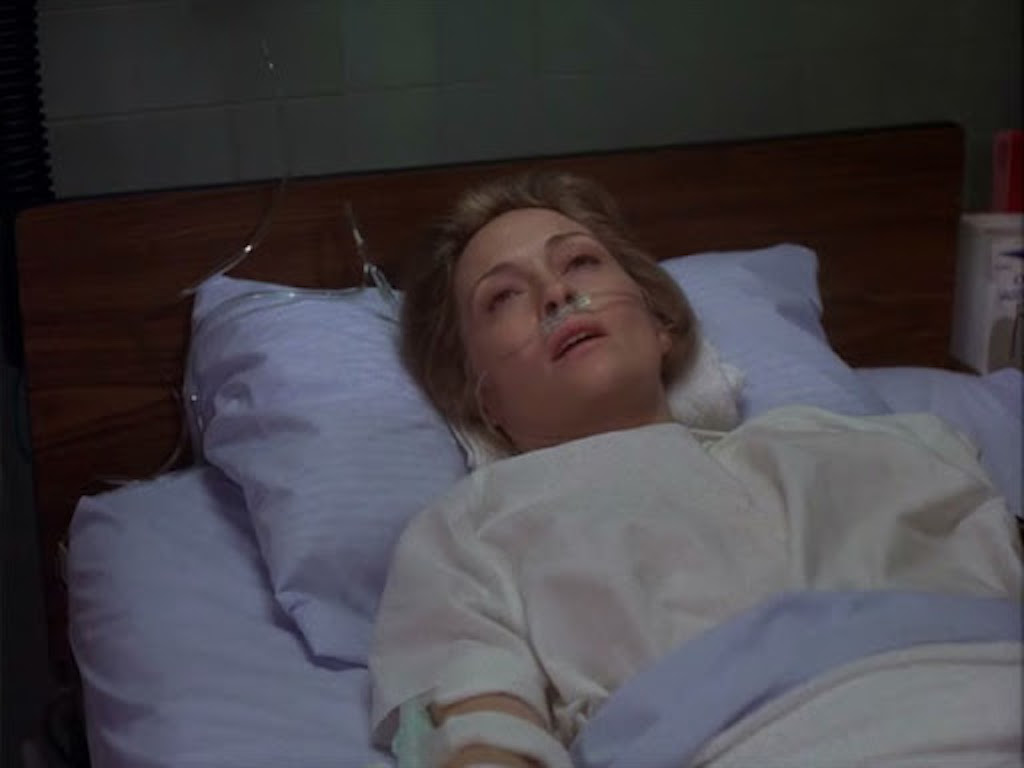
«With the changed intentions in bed, the woman’s clothing also changes, as does the size of the bed and not least the bed linen. The clothes are now high-necked, white or light-coloured thick-fabric shirts no longer model shapes but indicate cleanliness, take on an almost medical character. Often enough, she wears pyjamas of the man close to her with the intention of activating his backwardness or even a subliminal homophobia. Not infrequently, the intention is to imply an auto-eroticism in this lonely, feminine being there, in this exhaustion (the hands on the blanket, on the neck, on the breastbone, the hands under the blanket, on the belly, between the legs). These delicate hands are quite often feverishly in motion, manicured or not, a little one feels reminded of a conductor, who here, unfortunately, with less verve, casts her spell over an invisible orchestra. Perhaps this is what the boredom, the pressure, the tension of the whole situation requires. Fashions and also visual habits change such interpretations with every decade, of course, those concerning clothing just as much as those concerning masturbation. The beauty and strength should refer to a most active afterwards and not to the beauty and strength of the Now. The Now would be a short-lived action self-sacrificing sleep-death of a woman thus became a symbol of the extreme form of fulfilment of the dualistic notion that made the relationship between man and woman a simple matter of dominance and submission, in an arena where the 19th century man could live out and realise the dreams of power that had eluded him in the actual world.The sleep-death equation was clearly charged with morbid erotic implications that at least presented the man with the fantasy of conquest without struggle, of a life of power without constraint. The less demanding his mate, the greater his conquest. So a battle plan is needed, and this is to be laid out over the entire width of the bed, if there is a decorative bedspread all the better.The accompanying bedside cabinets are also exciting to look at. Are they small, robust constructions designed to house books, water or wine bottles, a teapot, a dinner tray and a revolver?Or is it small and filigree, a squiggly something, just enough space for a glass of water, a handkerchief and a pillbox.»
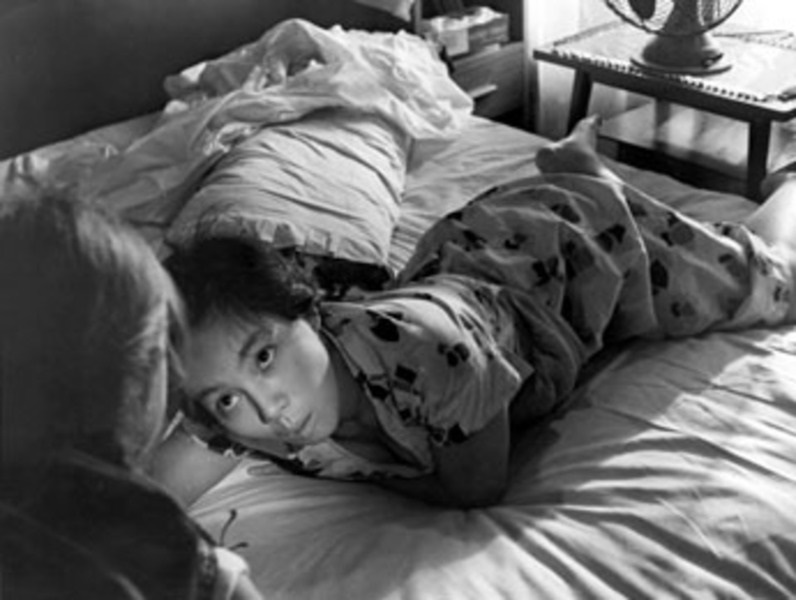
« When she does lie down, she usually lies in bed to demonstrate her immobility and helplessness. And if someone enters the room, it is rarely at her best. Either this visit is tantamount to a threat, or it has to be provoked by her in advance and step by step. This visit is often not without effort. Depending on the country’s architecture, her separate bedroom is usually on the first floor of the house. Or in a spacious flat at the end of a dark corridor, converted into a generally closed room. But depending on the course of the plot, this room develops into a centre of power, similar to an executive office. It is up to her to determine the function of her abode, and not to be distracted by. Even though the space seems to change little visually, the mere presence, and therefore equally the absence, of a person living out their social, cultural and sexual life in it in combination means that it is a space that is never static. Moreover, these are seemingly spaces worked only for the woman (mostly silky colours, small armchairs and side tables, make-up mirrors, opulent curtains, direct connection to the bathroom), spaces of identity and biographical representation and representation that capture women’s social positioning through both cultural practices and the materiality of the space itself. Or even omit to do so in full awareness. At the centre here is the bed, and within decades and cultures the perception of the activities performed there has changed: too much sleep seems just as unhealthy as too little sleep, how often should the bed be aired, how often should the bed linen be changed, and when exactly in the daily routine should the pillows and blankets be fluffed and should the bed be manoeuvred again into as untouched a state as possible? Is it even appropriate to eat or smoke in bed? What activities in bed indicate activities that are very reminiscent of a hospital bed? Control over the state of the bed offers interpretive possibilities for control over one’s own life. A social definition takes place. A bed does not make it easy.»
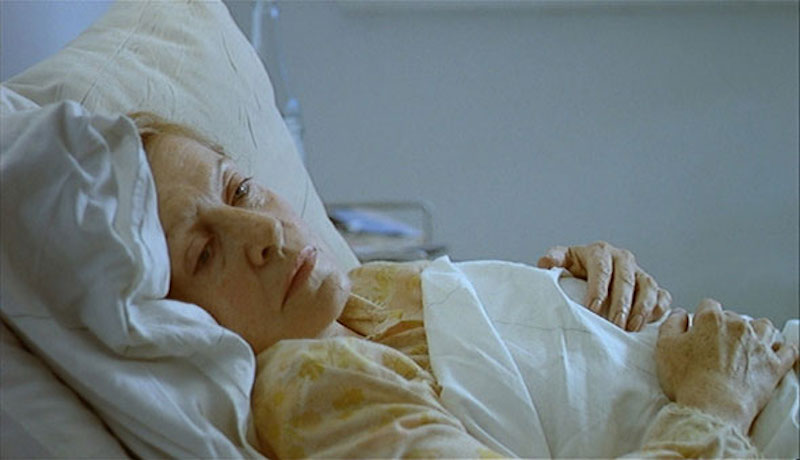
 « Thus, if certain men decide to express their individuality as domestic masculinity, this could also create resistance in the same person to spatial practices that maintain traditional masculinity. Of course, if women engage in traditional gendered activities in the home and understand them as a means of abolishing gender, this does not mean that male supremacy has been eliminated. Ultimately, it is up to the film itself to decide what exactly it wants to tell here. For once technical and scientific knowledge and medical know-how aside, “care” is also always a relationship between bodies, between people, between presences whose contribution to healing or at least to participation in life is all the more effective the more authentic it appears to the viewer. In this sense, this can take surprising, unconventional and imaginative paths, but always from the dramaturgical point of view of the encounter. Cinematographic films and their acting and scenic qualities often recall this truth with accuracy and sensitivity. In this respect, they are true mediators of knowledge and also a great pedagogical tool. Much like literature, cinema invites us to think about health and illness, suffering, care and medicine, the body and lived experience. And so it is still the cinema, the film, it is the image and the word which, in combination with acting, wants to tell a completely different world and story. And so it can do so.»
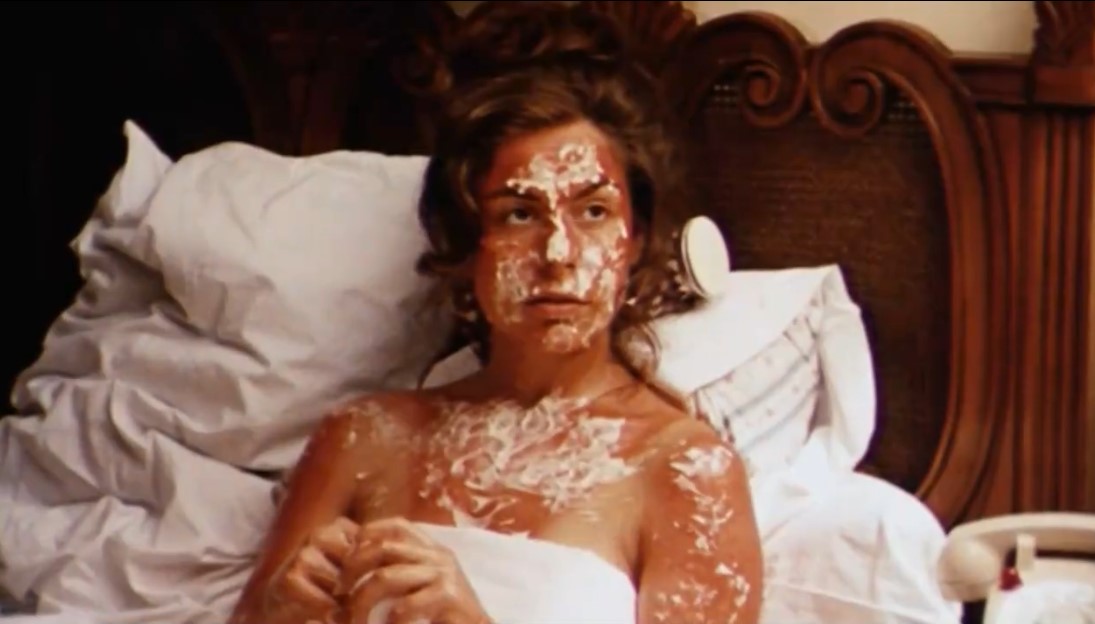
(This is an extract from my book ALICE IN ILLNESS «Kranke» Frauen im Film, published in 2022 with german Schüren Verlag | Marburg, a non-fiction publisher specialising in film and media, current affairs and the social sciences. )