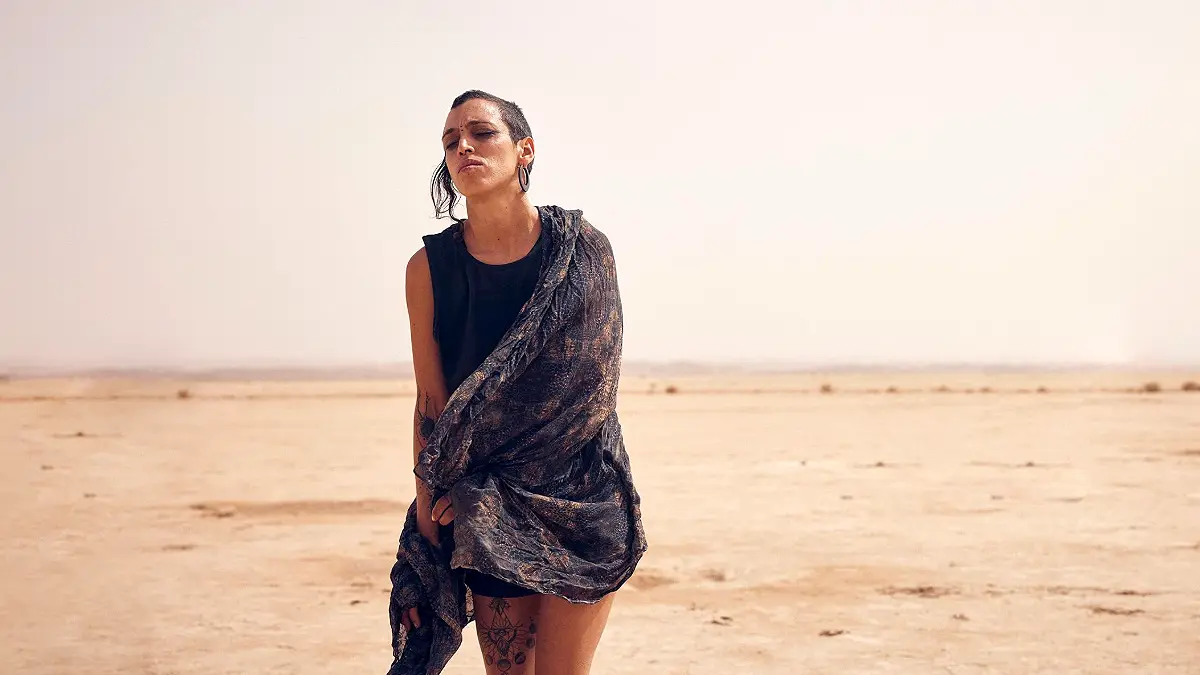
by Kasra Bordbar and Arash Monadi
Many films have addressed rave culture, from titles like Berlin Calling (Hannes Stöhr, 2008) and Human Traffic (Justin Kerrigan, 1999) to more commercial examples such as We Are Your Friends (Max Joseph, 2015). Most of these films, however, tend to reproduce a long-standing portrayal of raves as little more than “drug parties.” As popular music scholar Beate Peter notes in her work on rave historiography, this reductive view has often shaped public accounts of rave culture, foregrounding excess, intoxication, and youthful escapism (2020, 280). In these narratives, its most visible and sensational elements are emphasised, while its complexity is largely overlooked. As a result, rave is only rarely approached as something else: a sustained, embodied experience shaped through rhythm, intensity, and bodily endurance.
Sirat (Oliver Laxe, 2025) begins from this overlooked possibility. The film opens in a landscape shaped by war, where military presence, checkpoints, and a lingering sense of instability define the world. Against this background, Laxe stages a massive rave in the Moroccan desert, where towering sound systems have been assembled and bodies move together in circles around them.
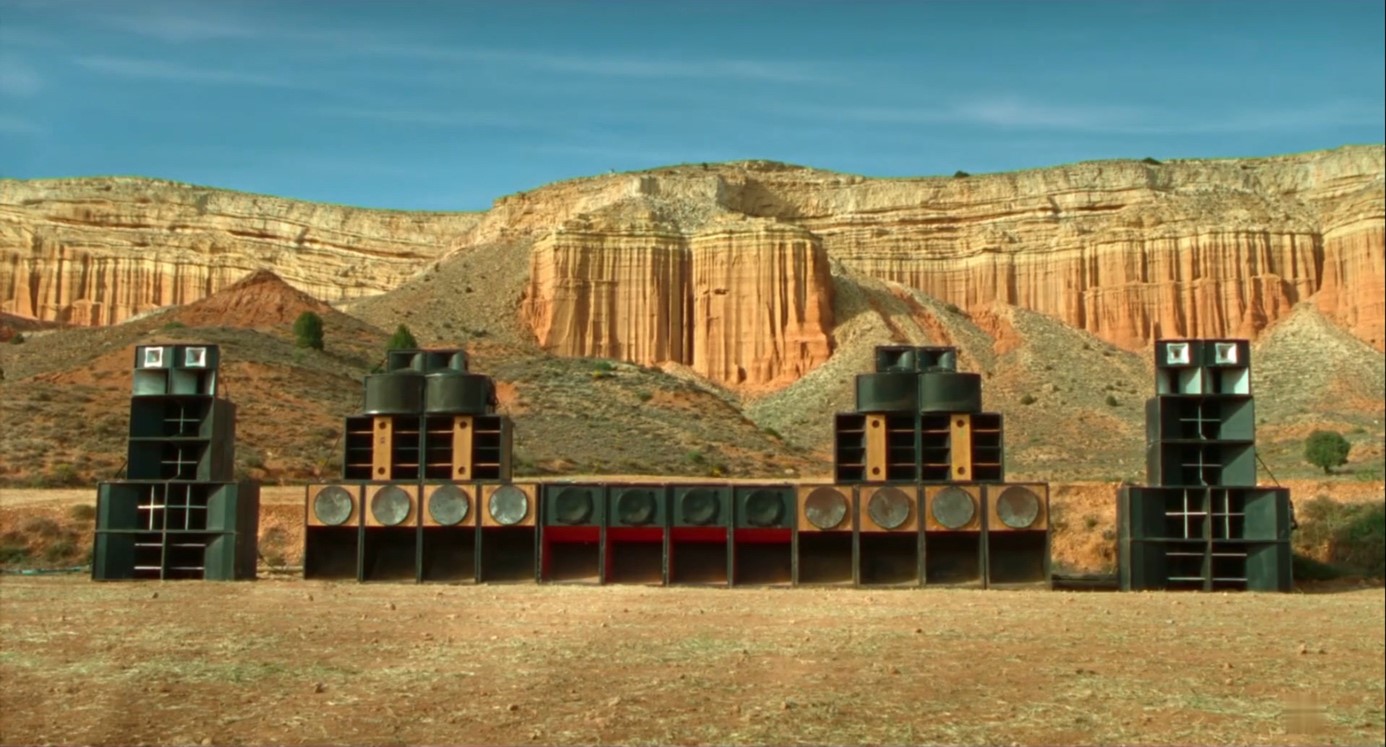
From this point on, the film follows a group of young Europeans who have come into the desert for a few nights of music, drugs, and dancing. After a series of incidents and sudden decisions, however, the gathering gradually loses the shape of a rave and turns into an unwanted journey across the desert. The group is forced into a prolonged passage through a landscape cut off from help, where the desert itself seems increasingly hostile. Bodies grow exhausted, and what first appeared as a temporary gathering begins to resemble something else: a difficult collective passage that must be endured to the end.
This gradual shift from a rave to a difficult journey is already suggested by the film’s title. In the opening credits, sir?t is described as a narrow bridge believed to connect hell and paradise, a path said to be thinner than a strand of hair and sharper than a sword. Here, the image functions less as a theological reference than as a way of framing movement itself: a passage that must be crossed despite uncertainty and danger. What the characters experience in the desert increasingly comes to resemble such a crossing, as the journey forward becomes inseparable from exhaustion, risk, and the absence of any clear return.
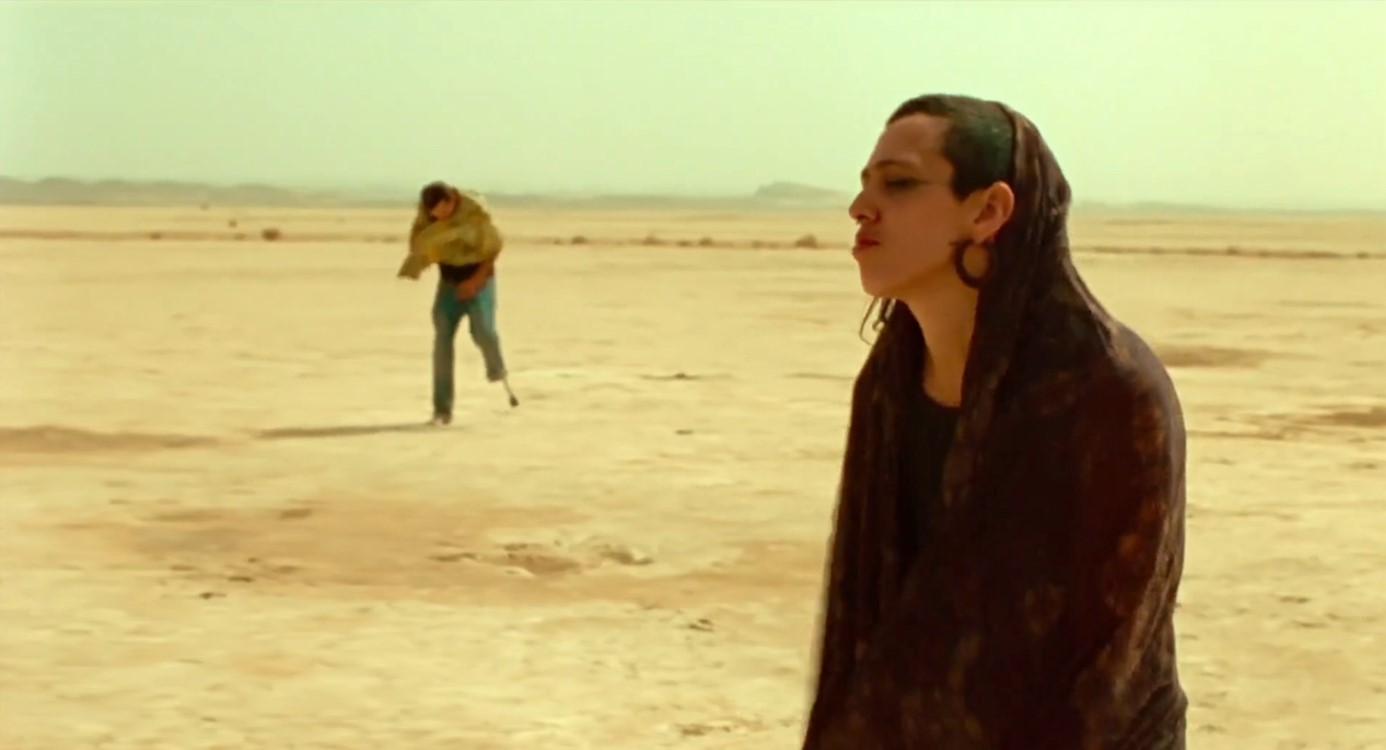
This logic of passage gradually becomes inscribed in the wounded and exhausted bodies moving through the desert, marked by exhaustion, danger, and the possibility of change. Their drifting and often trial-ridden movement recalls the wandering figures of Alejandro Jodorowsky’s cinema, especially El Topo (Alejandro Jodorowsky, 1970), where spiritual searching unfolds through violence, uncertainty, and prolonged movement across harsh landscapes. At the same time, Laxe places this predominantly Western group within a visual and symbolic vocabulary shaped by Islamic references, allowing images associated with ritual and spiritual crossing to quietly echo through the film without forcing a fixed interpretation. Rather than insisting on differences of religion or origin, Sirat suggests a shared experience of moving through uncertainty, as if what ultimately matters is less the identity of those walking the path than the difficult experience of crossing itself.
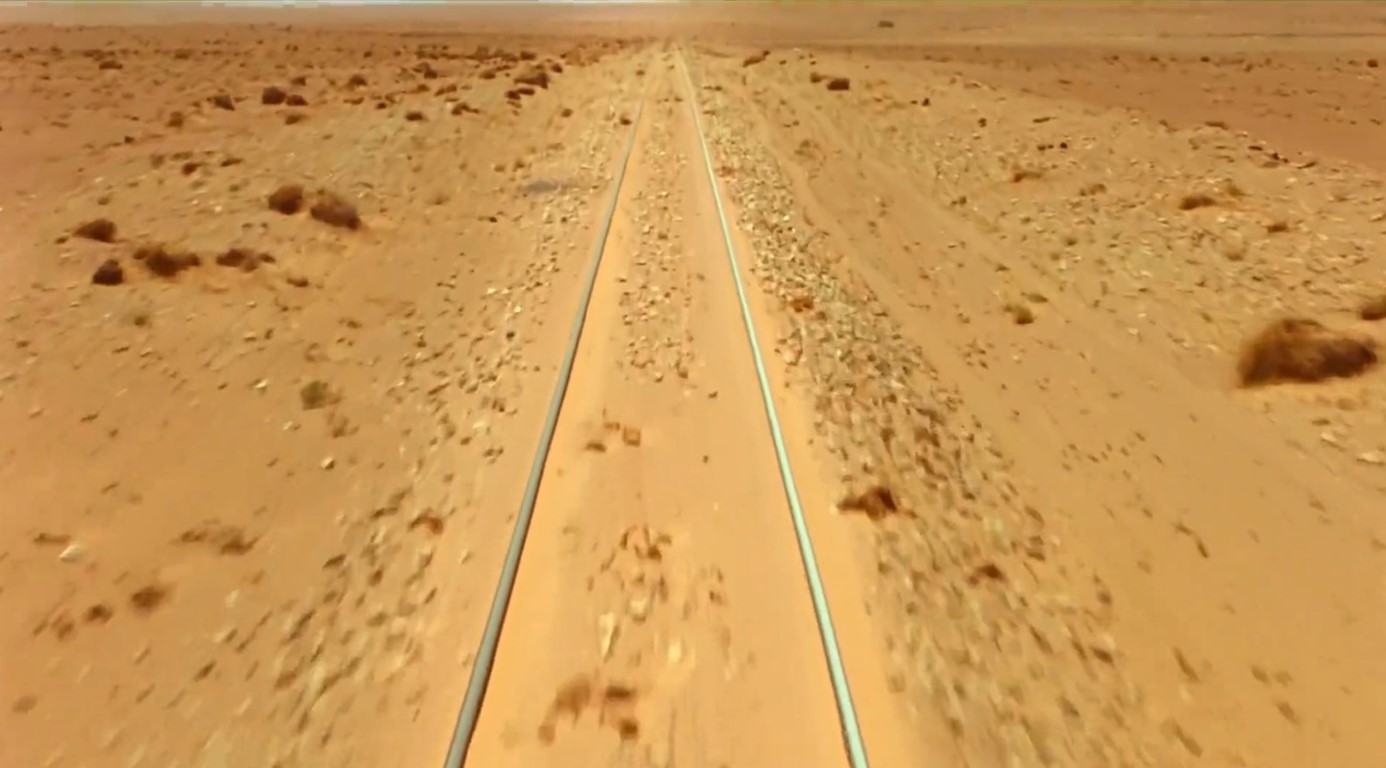
In formal terms, this journey is also shaped through a visual language that recalls the cinema of Abbas Kiarostami, an influence Laxe has explicitly acknowledged in discussing Sirat (Cronk 2025). The connection is not simply thematic, but formal: like Kiarostami, Laxe allows roads, vehicles, distance, and duration to organise the viewer’s experience of the film. The extended shots of desert roads in Sir?t evoke the road sequences of Taste of Cherry (Abbas Kiarostami, 1997) and The Wind Will Carry Us (Abbas Kiarostami, 1999), not because they repeat them directly, but because they treat movement through landscape as a way of thinking. As Devin Orgeron argues in his book, Road Movies, Kiarostami’s travellers are less a celebration of “mythic mobile freedom” than figures undertaking “mournful journeys toward an equally mythic stability” (2008, 196). The road is not just a route from one point to another; it becomes a cinematic structure through which time, uncertainty, and attention are stretched.
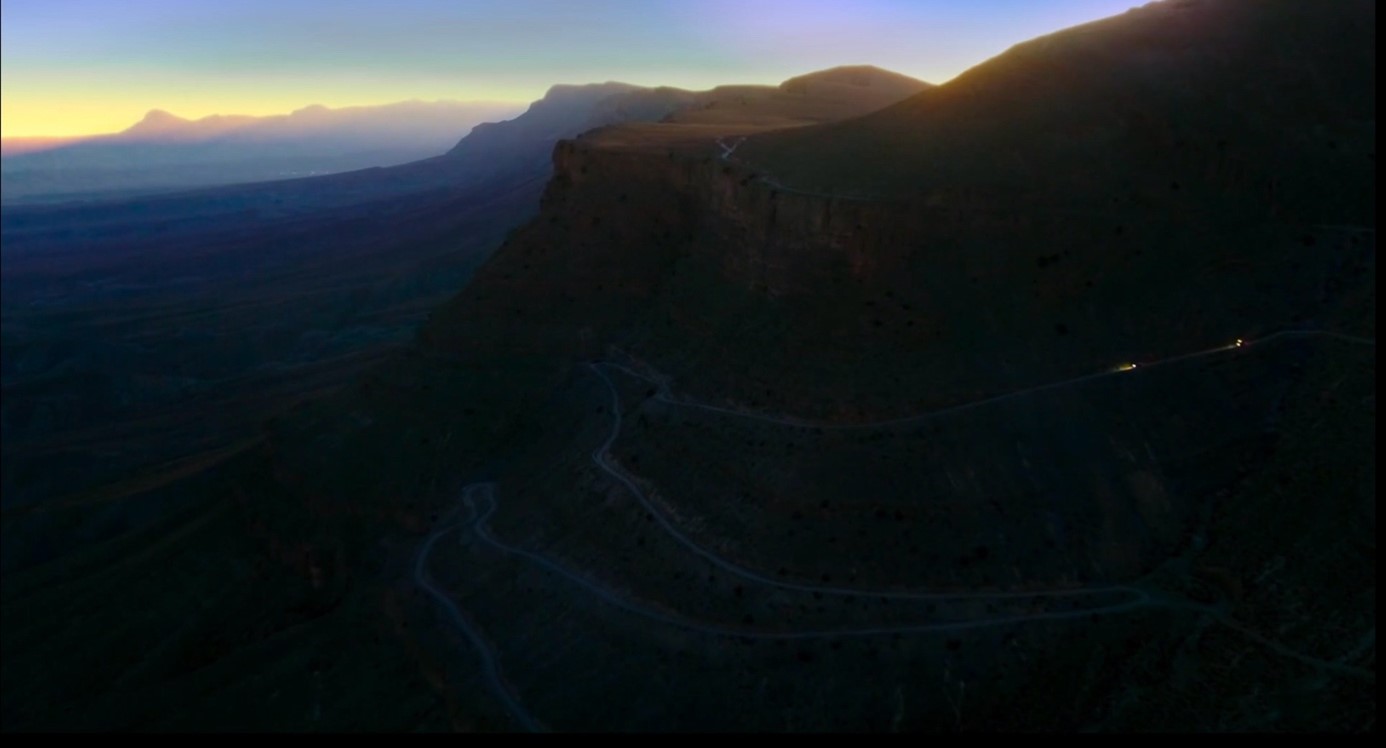
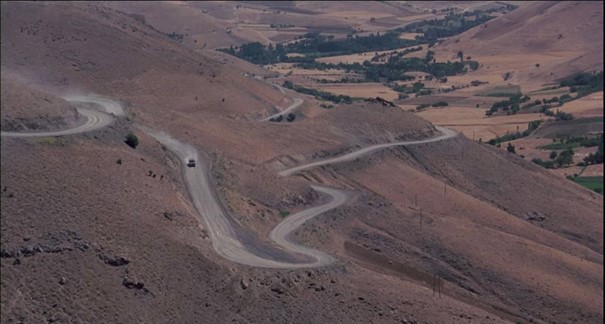
In this sense, Sirat can also be understood as a road movie, one in which the journey gradually alters the experience of those moving through it. Like many films in the genre, it unfolds through accidents, ordeals, and encounters that slowly alter the course of the journey. By the film’s final sequence, only three characters remain, surrounded by Moroccans aboard a train moving along a straight and seemingly endless track, a visual echo of the path suggested in the film’s title. Rather than functioning simply as a route from one place to another, the journey in Sir?t gradually transforms the collective energy of the rave into an experience shaped by uncertainty, loss, and endurance.
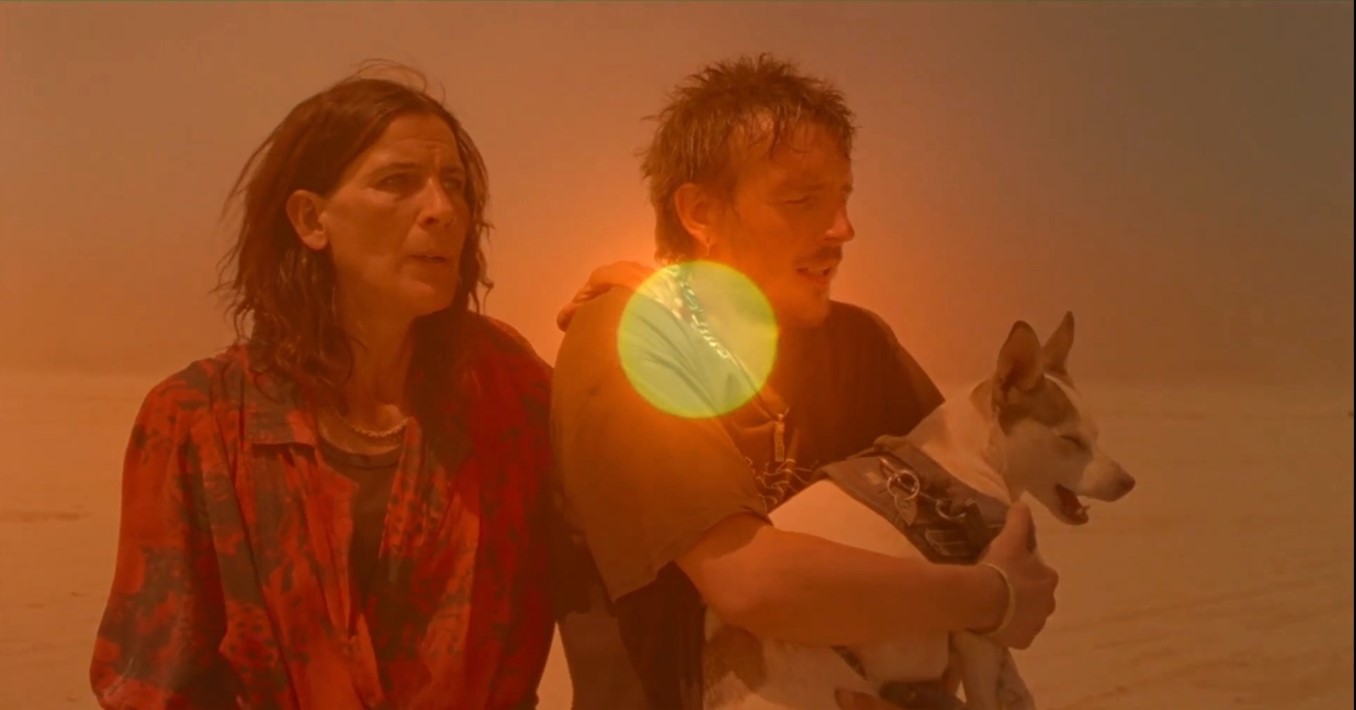
Ultimately, the film’s interplay between rave culture and Islamic imagery points toward a more unsettling possibility: that practices which appear radically different may nonetheless emerge from similar desires for meaning, transformation, or a sense of direction. Whether expressed through ritual prayer or through the collective rhythms of a rave, Sir?t suggests that experiences often seen as incompatible may, at certain moments, echo one another. At one point, this idea becomes almost literal, as the characters are forced to cross a landscape threatened by landmines, moving forward with a kind of desperate faith, as if belief itself were the only thing capable of carrying them through such deadly terrain.
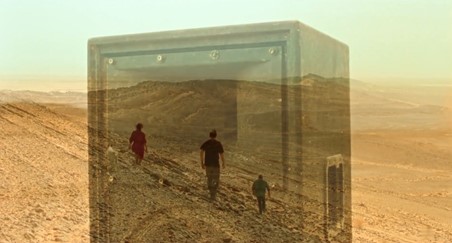
This idea finds one of its clearest visual echoes in a key sequence of the film. Bodies move in circles around the towering sound systems in the desert. A little later, one of the characters walks toward a nearby shack from which a Qur’anic recitation can be heard. Inside, she discovers a television broadcasting images of Muslims dressed in white circling the Kaaba, wrapped in its black cloth. Without forcing a direct equivalence, Laxe quietly places these images beside one another. In both scenes, bodies move collectively around a centre, whether through the rhythms of the rave or the rituals of prayer, gathering around something that appears to give direction, rhythm, or meaning. Even the immense black stacks of the Electro-Voice sound system begin to resemble dark cubes around which people assemble. The parallel remains deliberately open, yet the visual echo suggests that practices appearing to belong to entirely different worlds may sometimes emerge from similar human desires for orientation, meaning, or transformation.
From this perspective, the rave in Sirat is not merely a backdrop for excess or spectacle, but one of the film’s central ways of thinking about movement, collective experience, and belief. In this sense, Laxe’s film stands apart from many earlier representations that reduce rave culture to chaos, drugs, or youthful escapism. Rather than treating the rave as a temporary escape from reality, Sir?t imagines it as a difficult form of collective passage, one in which dancing bodies move together through uncertainty, exhaustion, and risk in search of something that remains difficult to name, yet no less deeply felt.
Notes
- Orgeron, Devin. Road Movies: From Muybridge and Méliès to Lynch and Kiarostami. New York: Palgrave Macmillan, 2008.
- Peter, Beate. Experiential Knowledge: Dance as Source for Popular Music Historiography. Popular Music History 12, no. 3 (2020): 275–294. https://doi.org/10.1558/pomh.39678
- Cronk, Jordan. Oliver Laxe onSirât. Film Comment, Spring 2025.